H.A.V.E.N. Update
By Cathleen Osborne-Gowey (Program Admin – Crime Victim Advocate) 918.554.2836 or COsbornegowey@estoo.net
Upcoming Events:
Support Group: Please call our office for details.
Find us at our Haven Booths at: Eastern Shawnee Children’s Powwow event on Saturday August 2nd and Community Baby Shower honoring Delaware County Families on August 1st 3-6pm.
Program Update:
Hello all –
As we get closer to fall our program is as busy as ever providing necessary services and gaining new skill sets through training. One of our advocates has begun her training on Trauma Informed Yoga – a service we’re hoping to provide by next year! As we get our kids ready for school, we start thinking about their safety and sometimes we worry that our kids might be bullied. In that worry do we ever wonder why some kids bully? What drives them to pick on other kids and what can be done about it? This month’s article helps us understand that why some kids bully and if left untreated the bullying can lead to abuse as an adult.
From DomesticShelters.org – https://www.domesticshelters.org/articles/children-and-domestic-violence/from-bully-to-batterer
From Bullying to Domestic Violence
Whether it’s intergenerational violence or schoolyard bullying, if kids don’t learn healthy conflict resolution, they can turn into adult abusers
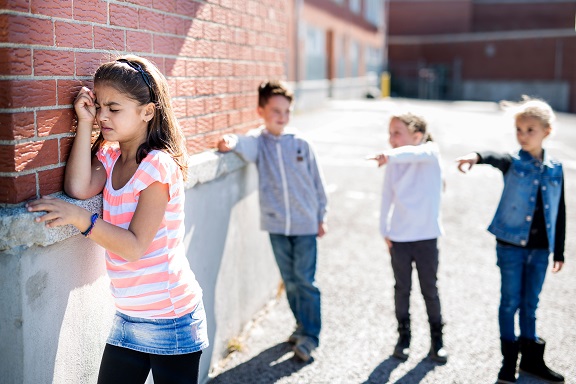
Bullying should never be a rite of passage in anyone’s childhood. Once looked at as just “kids being kids,” today we know better. The youth who we’re quick to label as “bullies” are many times imitating what they see at home, acting out the power and control dynamic that may be on display by an abusive caregiver or family member. Of course, there are different reasons why kids bully others, but regardless of its roots, experts agree it should never be ignored. Being bullied is a type of childhood trauma, and its effects can lead to lifelong negative issues. The effects of bullying in childhood can carry over into adulthood, increasing the risk of being abused or being an abusive partner.
Why Do Kids Bully Others? According to StopBullying.gov, a site compiled by information gathered from the U.S. Department of Health and Human Services, kids who bully may do so for the following reasons:
- Low self-esteem
- A desire to fit in with a peer group
- To elevate social status among friends
- Individuals were bullied themselves
- Bullying, aggression or violence at home
- A lack of emotionally supportive parents at home
- Having parents who are authoritarian or overly reactive
- Low parent involvement at home
- A lack of understanding of or control over one’s emotions
- Being excluded or stigmatized at school
- Attending a school that doesn’t address behavioral issues
Bullying can take several forms—in-person teasing and name-calling, ostracizing other kids and cyberbullying peers online are a few. But all of these have the potential to escalate into more violent forms of bullying that include intimidating, threatening, stalking or fighting. And no, bullying behaviors won’t necessarily just go away as a bully grows up. “There’s definitely a correlation between children who bully and adults who batter, however that is not to say that all children who bully will become batterers or that every adult batterer was a bully,” says Yelitza Zamora, former community engagement manager with Harbor House of Central Florida, a domestic violence organization that offers anti-bullying prevention programs to schools in the area.
Zamora says childhood bullying, like any other aggressive behavior, boils down to having power and control, the exact same factors in which adult domestic violence is rooted. This can lead to not just physical violence as an adult but emotional, verbal, financial or other types of abuse. “I think bullying is more indicative of a child who is feeling hopeless. A kid that bullies typically doesn’t have high self-esteem,” says Shetter (Ken Shetter the National Director of the Family Justice Center Alliance and President of One Safe Place in Fort Worth, Texas). “When you are experiencing domestic violence as a child, you are more likely to feel marginalized and alone, and more like you don’t have control over your own life. Bullying may be a response to those kinds of feelings.”
Studies have shown that children from traumatic childhoods who have supportive adult allies in their life can become high-achieving adults. Showing kids that they can overcome the trauma they’ve experienced, rather than give in to the anger that’s developed as a result, can give them a sense of not only control, but also hope, regarding their future.
Four Steps to Follow if Your Kid Is Bullying
- Intervene: Don’t let bullying continue or let kids “figure it out on their own.” Kids may not have the maturity to create a safe resolution or may lack the language necessary to come to a compromise. Separate the kids involved and talk to each child about what they feel they need in order to resolve the issue.
- Set firm boundaries: What will you, as an adult, allow in your home, school or neighborhood? Give examples of respectable behavior and permitted language. Stay calm when discussing these boundaries. Show kids they have a safe place to discuss their feelings without anger.
- Resist harsh punishments: A bully is often emulating what they’ve experienced or seen in their own life, possibly with an abusive parent at home. Punishing them is often ignoring the underlying trauma. When possible, help the bully access additional services to deal with their anger, such as counseling. Keep in mind the victim may also need services to deal with the trauma of being the target of a bully. Keep in mind that gang violence needs to be dealt with in other ways.
- Support the child or children who are being bullied. Stopbullying.gov offers up ways to make sure the kids involved in bullying feel safe.
For more information, please reach out to Haven to speak with an advocate. Haven Office Hours: 8:30 am – 4:30 pm Monday – Friday
HAVEN Does NOT provide 24- hour service. After hours please call:
StrongHearts Native Helpline https://strongheartshelpline 1-844-762-8483 (call or text) or Community Crisis Center, Miami, OK 1-800-400-0883
StrongHearts and Community Crisis Center have 24 hour service
Please call the HAVEN office during business hours for more information.
918-554-2836 or Text Line: 918.533.3070
Program Website: https://havenprogram.com/
Program Email: havenprogram@estoo.net Facebook: HAVEN Tribal Program, Twitter: @ProgramHaven, Instagram: HAVENTRIBALProgram.