“Oklahoma consistently ranks among the worst states in the nation for the safety and wellbeing of women. According to the Violence Policy Center, Oklahoma is fourth nationally in the rate of women murdered by men. Not fourth from the bottom. Fourth from the top.”
I hope you will take a few moments to read this thought provoking article found on GENXPLETIVES Substack.

It was the last nine weeks of my freshman year of high school. My family had just moved back to Oklahoma after years away. I arrived to find that the day before I walked in the door, the teacher had announced I was coming. The boys in class responded by asking for my measurements.
I was fifteen years old.
The following year, during my sophomore year, I was leaving basketball practice and bent over in the empty gym to tie my shoes. A group of boys surrounded me. One stood over me, deliberately positioning himself to make it appear as if I was performing oral sex on him.
I hadn’t even fully found my footing in this state yet.
Decades later, I am still waiting for it to surprise me.
The State of the State
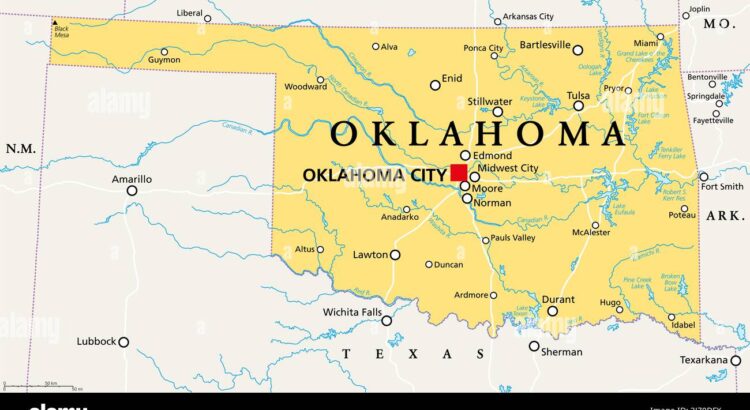
Oklahoma consistently ranks among the worst states in the nation for the safety and wellbeing of women. According to the Violence Policy Center, Oklahoma is fourth nationally in the rate of women murdered by men. Not fourth from the bottom. Fourth from the top. Native American women in this state face domestic violence at rates that dwarf national averages, in a state where tribal-state partnerships on these issues remain perpetually underfunded and under-discussed. Oklahoma’s healthcare access, maternal mortality, child poverty, and economic equity numbers all paint the picture of a state that has, in measurable terms, chosen not to prioritize the humans who make up more than half its population.
These are not abstract statistics. They are the arithmetic of daily life for women in Oklahoma — of calculating risks, navigating institutions, absorbing indignities, and deciding which battles are winnable.
And yet the men who govern this state campaign on protecting us.
The World Behind the Screen
In March 2026, CNN published the results of a months-long investigation that should have stopped the nation cold. The reporters uncovered a global online network — in chat groups, on mainstream pornography platforms, in Telegram channels — where men trade advice on drugging and raping their wives and partners while they sleep. One such site had accumulated more than 20,000 so-called “sleep” videos, drawing tens of millions of visits each month. The community members don’t just watch. They coach one another. They sell chemicals. They livestream assaults for cryptocurrency. One French lawmaker who had herself been drugged by a former senator called these communities “online rape academies,” and said they teach every subject needed to become a predator.
“I was branded for life with a hot iron,” said one survivor, an Italian woman who discovered videos her husband of twenty years had made of himself assaulting her after drugging her with alcohol and sedatives. She hadn’t known for years.
“You don’t expect anything other than innocence to come from your partner,” said Zoe Watts of Devon, England, whose husband of sixteen years had been crushing their son’s sleeping medication into her evening tea and raping her while she was unconscious. He told her as if reading from a grocery list.
These cases are not aberrations. They are the far edge of a continuum — a culture in which the violation of women is eroticized, distributed, monetized, and discussed in communities that find the whole business quite normal. Experts note that reporting on drug-facilitated sexual assault is sparse by design: victims often have no memory, test windows are short, and law enforcement has historically been skeptical. When one survivor showed police video footage of her partner assaulting her while she was unconscious, she was told it wasn’t clear evidence — because it looked like she might be “pretending to be asleep.”
We worry about strangers in parking lots. We worry about the wrong people entirely.
The Good Ol’ Boy Playbook
You don’t have to look to Europe or to horror-story corners of the internet to find institutional protection of men who harm women. You can just look at the Oklahoma State Capitol.
State Rep. Ty Burns, a Republican from Pawnee, spent Thanksgiving 2024 following his wife into the bathroom during an argument and attempting to gouge her eye out with his finger. The attack broke blood vessels and left her unable to work for a week. Five months later, Burns used his pickup truck as a weapon, pursuing a van carrying his sixteen-year-old daughter and her grandmother down a dirt road — striking the vehicle and blocking their path while his daughter texted that she thought he was going to kill them.
And then? Nothing happened. Not for months.
Burns continued voting on legislation. He was represented by fellow Republican legislator Chris Kannady, a colleague and Speaker’s counsel. The Pawnee County DA recused himself. Attorney General Gentner Drummond’s office stepped in — and when charges were finally filed in August 2025, they were filed and adjudicated on the same day, in secret, as misdemeanors. No arrest photos. No court appearances. No jail time. A one-year suspended sentence.
Burns then issued a statement from House media resources — funded by taxpayers — justifying the plea. House Speaker Kyle Hilbert and Drummond both offered muted condemnations while praising Burns for “taking responsibility.” Neither demanded he resign. It took a public firestorm, pressure from Governor Stitt, and the state Republican Party chair to finally push him out — and even then, he negotiated a delayed effective date so he could finish an interim study he wanted to complete.
As a parting note: that interim study was on PTSD. And the bill Burns had voted to pass — overturning a gubernatorial veto — shortened mandatory domestic violence intervention programs from 52 weeks to 26. He voted for it knowing he was under criminal investigation for domestic violence. Nobody said a word.
This is not an accident. This is a system.
I’ve worked in male-dominated fields for most of my career. I became, over time, somewhat numb to it. There was the morning colleagues told me my legs “went from the floor all the way to heaven.” There was the boss — a proudly religious man who had spent hours in my office explaining that women should submit to their husbands — who informed me that my name had come up for a promotion, and that he had declined it on my behalf, because I had two children and would want to be home with them. I had no witnesses. His supervisors attended church with him. When I’ve told this story since, people admonish me for not reporting it. I tell them: report it to whom, exactly?
The Governor’s Race and the Pretense of Protecting Women
Drummond, who oversaw the Burns case, is now running for governor. He has defended his decision to charge Burns with misdemeanors. He campaigns on law and order.
Former House Speaker Charles McCall, another Republican candidate, runs ads declaring he “led the charge to keep boys out of our daughters’ locker rooms and to protect women in sports.” That framing is doing an enormous amount of heavy lifting. His actual record on women begins and ends with two anti-transgender bills. He presided over a legislature that passed a near-total abortion ban — no exceptions for rape or incest. After the 2018 teacher walkout, a workforce that is predominantly female, he didn’t champion their cause; he hired an armed officer and restricted Capitol access in response to peaceful protest. On pay equity, maternal health, childcare, economic security — nothing. Not a bill championed, not a hearing called, not a public statement made.
The “women’s sports” framing deserves particular scrutiny. McCall presents himself as the defender of female athletes — but his record reveals a man who has never meaningfully invested in the actual conditions of women’s athletics in Oklahoma. There are no bills championed to expand girls’ programs, increase coaching resources, close funding gaps between boys’ and girls’ sports, or improve facilities. His version of protecting women’s sports begins and ends at the locker room door — defining female athletes primarily by who is excluded from their spaces rather than what opportunities they are owed inside them.
When I moved to Oklahoma as a teenager, I discovered the state was the last in the nation still requiring girls to play 6-on-6 basketball. I had only ever known 5-on-5. That may sound like a technicality, but it isn’t. Athletic recruiters evaluate specific skills — full-court endurance, transition play, defensive range — that 6-on-6 simply doesn’t develop. The format wasn’t just different. It was quietly disqualifying. It narrowed futures before girls ever had a chance to compete for them. And Oklahoma held onto it long after every other state had moved on. The University of Oklahoma didn’t even have a women’s basketball team when I arrived.
The irony is difficult to overstate. When the structure of the game itself was limiting women’s opportunities — when the rules were literally written to keep female athletes smaller and slower and less visible — Oklahoma shrugged. Now McCall wants credit for protecting those same women from a threat he can photograph and campaign on.
Protecting women’s sports, in his telling, means keeping certain people out. It has never meant putting real resources, real investment, or real advocacy in. It has never meant asking what women’s athletics in Oklahoma could look like if the people claiming to champion it actually did.
For these men, “protecting women” is a phrase with a very specific and limited meaning. It means controlling what restrooms trans people use. It means banning abortion. It means, when one of their own breaks his wife’s blood vessels trying to rip out her eye, finding a way to call a misdemeanor plea deal a form of accountability.
It does not mean the day-to-day conditions of women’s actual lives.
The Democrats Are Not Off the Hook
The Burns case is a Republican failure. But this is not a partisan story — it’s a story about institutional power and the men who protect each other inside it.
State Rep. John Waldron, a Tulsa Democrat who served as chairman of the Oklahoma Democratic Party, resigned from that chairmanship in December 2025. The official explanation was “personal reasons.” The party thanked him for his service. Leadership moved on.
The real reason, reported months later just after candidate filing closed: Waldron had used an AI tool to animate photos of himself and a woman — a potential candidate for public office — into a GIF depicting the two of them kissing. He sent it to her. At 2:13 in the morning.
He acknowledged it. He called it “a bad day.” He said he was under “enormous personal stress.” He said he hadn’t meant to send it. He continued serving in the House.
The House Democratic Caucus had known for months. They had asked him, multiple times, to step down and not file for reelection. He filed anyway. Only after the story broke publicly — and only after the filing period had closed, ensuring his name would remain on the ballot regardless — did Waldron announce he was suspending his campaign. He did not resign from office.
House Minority Leader Cyndi Munson, a candidate for governor herself, said the slow and private handling of the matter was to protect the victim. That may be true. It is also true that an aspiring candidate for public office received a sexualized AI-generated video of herself and the chairman of her state party, and that the institution’s first instinct was containment, not accountability.
Multiple other women came forward afterward with their own accounts of Waldron’s behavior. Former Tulsa County Democratic Party Vice Chairwoman Kayla Merchant wrote publicly that Waldron had made advances on her, had crossed boundary after boundary, and that she had doubted her own judgment at the time and said nothing. “I should’ve immediately reported his behavior,” she wrote. “But I didn’t.”
The public response to the story offered its own uncomfortable window. When The Oklahoman covered Waldron’s suspension, the comments filled with the predictable minimizations. One reader called the AI incident a “gaff” that warranted an apology and nothing more — and spent more words criticizing Waldron’s choice of neckwear than his behavior toward a woman he held power over. Another called it “trivial.” Others pivoted immediately to female politicians behaving badly, or questioned whether a kissing image even constituted wrongdoing at all.
This is the ambient noise that surrounds every story like this one. Not overt hostility — just a steady current of voices working to shrink what happened, redirect attention, and establish that the real problem is everyone’s overreaction. It is remarkably effective. And it is part of why women calculate so carefully before they speak.
This is the throughline — not the misconduct itself, but the silence around it. The silence of colleagues. The silence of institutions. The casual dismissal of bystanders. The explanation offered, always, that silence was for the victim’s protection, never examined against the question of whose protection it actually served.
There was the time my boss — a man in his sixties — bragged to an entire room of men I was about to train about what he wanted to do to me sexually, just before I walked in. I found out later. When I began asking colleagues if they would come forward with me to HR, the room went quiet. When I recounted this to another colleague at a different company, his first response was to tell me I was wrong to feel what I felt. After all, he said, I wouldn’t want to be known as a troublemaker.
There was the neighbor at a dinner party who said, when the subject of harassment came up: “Why would anyone file sexual harassment? Just go find another job.” She had the luxury of not working if she chose. I did not. I worked in a technical field with limited openings, with accumulated benefits I couldn’t simply abandon, and leadership positions that would have required starting over from nothing. She could not understand why that math didn’t work. She had never had to run those numbers.
The National Mirror
Oklahoma is not an island. What happens in its statehouse reflects something happening in institutions across the country.
In April 2026, both Rep. Eric Swalwell of California and Rep. Tony Gonzales of Texas resigned from Congress amid sexual misconduct allegations — Swalwell facing accusations of assault and predatory behavior toward women who worked for him, Gonzales having admitted to an affair with a staffer who later died by suicide. Their resignations came only after the prospect of expulsion votes made staying untenable.
Swalwell’s downfall was not driven by his institution. It was driven by three women in a group chat who decided they were done waiting. A Democratic strategist who alleged harassment dating to a college trip in 2019 teamed up with an attorney and content creator who made a video. The video spread. Other women came forward. Within days, one of the leading candidates in the California governor’s race had dropped out, and within a week he had resigned from Congress.
The women who organized told NPR they had to go outside normal channels because the normal channels were not built for them. “What we have done is hopefully blown the door open a little bit to make it clear that we don’t have to put up with this,” said one of the organizers.
Back in Oklahoma, women are still largely expected to use the normal channels. Report it to HR. Tell a supervisor. Trust the party. Trust the caucus. Trust the investigation. And if that doesn’t work — well. Go find another job.
The System That Protects Itself
What connects Ty Burns and John Waldron, Gentner Drummond and Kyle Hilbert and Cyndi Munson, is not party affiliation. It is the instinct of institutions to absorb scandal, minimize exposure, and protect the person at the center of it — until public pressure makes that protection more costly than accountability.
Burns’ crimes were processed in secret on a single day and his fellow lawmakers praised him for taking responsibility. Waldron’s behavior was handled quietly inside the caucus for months, his resignation from the party chairmanship dressed up as a personal decision, his continued candidacy tolerated until it became a public liability. In both cases, the people with power to act knew. In both cases, they waited.
I think about the manager at my company who made wildly inappropriate comments to women across his entire twenty-year tenure, removed only because someone — scared, calculating the personal cost — finally found the courage to speak. I think about how her reward for speaking was to be quietly reorganized under a team that gave her demeaning work assignments, managed by one of his friends, in a slow-motion attempt to push her out. I think about the manager who then walked the halls threatening to ruin whoever had reported it, until a director finally called him in and he went quiet.
The system is not broken. The system is working as designed. It is designed to make the cost of speaking very high, and the cost of silence very manageable. It is designed so that the woman who reports loses something — a job, a reputation, a future promotion — and the man who is reported either loses nothing or loses nothing for a very long time.
The Reckoning That Hasn’t Come
Oklahoma is not among the worst states for women because its people are uniquely indifferent or uniquely cruel. It is among the worst because indifference has been institutionalized — in the laws passed, the funding allocated, the investigations conducted quietly, the resignations announced with thanks for service, the promotions declined on someone else’s behalf, the silence kept by those who attended church with the accused.
The CNN investigation into global rape communities is not a story about the internet. It is a story about what happens when a culture decides, through a thousand small and large choices, that the sexual autonomy and physical safety of women is negotiable. The men in those chat groups learned somewhere that this was acceptable. They did not invent the lesson from scratch.
Oklahoma’s governor’s race is underway. The Republican frontrunners are campaigning on protecting women. The Democrat who used AI to create a sexualized video of a potential female candidate is still collecting his legislative paycheck and voting on legislation that affects the women of House District 77. The attorney general who prosecuted attempted eye-gouging as a misdemeanor wants to be promoted to the state’s highest office.
Four domestic violence bills have recently passed both chambers of the legislature and were praised unanimously. That is genuinely good. A floor vote is not a culture. A unanimous bill is not accountability. Until the men who write the laws are held to the same standards as the laws they write, Oklahoma will continue to rank fourth in the nation for women murdered by the men who were supposed to love them.
I think about the girl I was when I arrived in Oklahoma as a fifteen-year-old, walking into a classroom full of boys who already knew my name and had already decided what I was for. I think about how long I spent learning to be numb. I think about all the women I know who made the same accommodation — who calculated the cost of speaking and decided it was too high, who found another job, who doubted their own judgment, who didn’t report it, who kept the secret because the institution asked them to, who were thanked for their service when they left.
Oklahoma will be great for women when the answer to “what do I do?” is not “go find another job.”
Oklahoma will be great for women when the men who govern us are held to the same minimum standard we expect of each other: that you do not use your power to harm the people around you, and that if you do, the institution does not protect you.
Oklahoma will be great for women when shame actually changes sides.
We are still waiting.
We certainly have a lot of work to do to create a culture where accountability is not optional, survivors are supported without fear of retaliation, and no one is shielded from consequences because of their title, position, or influence. Each of us has a role to play—by listening to survivors, supporting advocacy efforts, challenging harmful attitudes, and demanding that our institutions protect people rather than power. Real change happens when silence is replaced with action.
Thank you for reading.
HAVEN Advocates are here to help!